I hear it all the time from pet owners here in Snellville: “But we have a big backyard!”
And I get it – you invested in a home with space for your furry friend. You see them out there sometimes, sniffing around, maybe chasing a squirrel. So everything’s fine, right?
Not necessarily.
In my 20+ years of caring for pets in the Snellville area, I’ve learned something important: A backyard is not a substitute for engagement, enrichment, and exercise. Think about it this way – would you be happy spending every day in your living room, even if it’s spacious? Your dog feels the same way about their backyard.
The good news? Dogs are excellent communicators. They’ll tell you when they’re bored – you just need to know what to look for.
Here are 5 telltale signs your dog is bored, even with yard access, and what you can do about it.
Sign #1: Destructive Behavior That Seems to Come Out of Nowhere
What It Looks Like:
- Chewing furniture, shoes, or baseboards
- Digging holes in the yard (or worse, in your couch!)
- Shredding papers, pillows, or anything they can get their paws on
- Scratching at doors or walls
Why It Happens: Your dog isn’t being “bad” – they’re being bored. Dogs need mental stimulation, and when they don’t get it, they create their own “entertainment.” Chewing and digging release pent-up energy and give their brains something to do.
The Backyard Connection: Your yard might be big, but after the first few weeks, your dog has smelled every square inch of it. There’s nothing new to explore. No new challenges. No mental workout. So they come back inside and find their own “projects.”
What Helps: Regular walks introduce new smells, sights, and experiences. Every walk is like a puzzle for your dog’s brain – they’re processing new information, exploring unfamiliar territory, and getting genuine mental enrichment that a familiar backyard simply can’t provide.
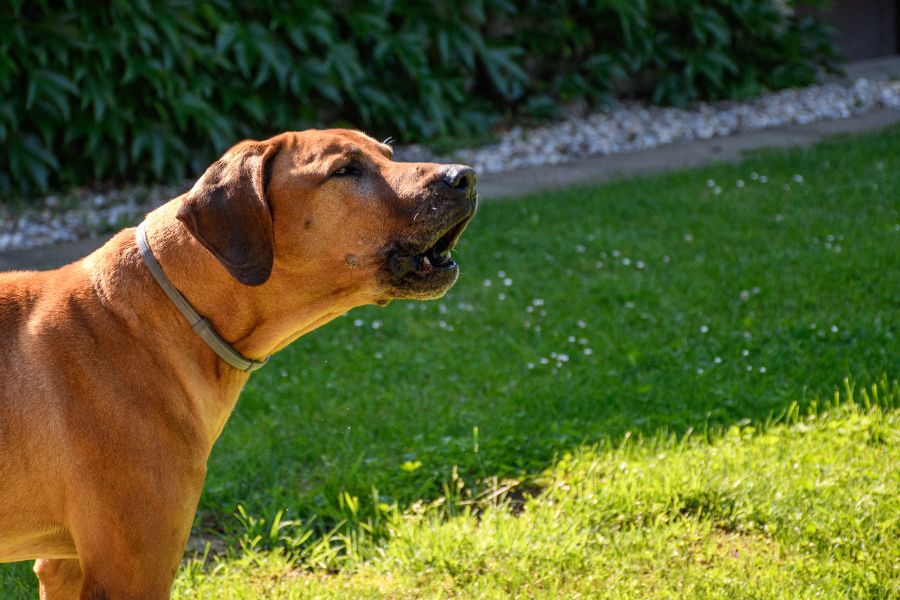
Sign #2: Excessive Barking (Especially at “Nothing”)
What It Looks Like:
- Barking at every sound outside
- Alert barking at the mailman, neighbors, birds, wind… everything
- Barking that seems disproportionate to the trigger
- Barking that doesn’t stop even after you address the “threat”
Why It Happens: A bored dog becomes a hypervigilant dog. With nothing meaningful to occupy their attention, every little stimulus becomes HUGE. That squirrel? EMERGENCY! The neighbor getting their mail? RED ALERT!
The Backyard Connection: Ironically, having a backyard can actually worsen this behavior. Your dog can see and hear the neighborhood but can’t interact with it. It’s like watching TV all day without being able to participate – frustrating! This builds arousal and reactivity over time.
What Helps: Structured walks teach your dog to calmly observe their environment. They learn that the mailman is routine, not a threat. They get to actually experience the neighborhood instead of just surveilling it from behind the fence. Regular exercise also reduces overall anxiety and hypervigilance.
Sign #3: Following You Everywhere (The Velcro Dog)
What It Looks Like:
- Your dog shadows you from room to room
- They seem anxious when you’re out of sight
- They stare at you constantly, even when you’re busy
- They paw at you for attention repeatedly
Why It Happens: Your dog is desperate for engagement. You’ve become their only source of entertainment and mental stimulation. They’re essentially saying, “You’re the only interesting thing in my life – please don’t leave me alone with my boredom!”
The Backyard Connection: Going outside alone isn’t engaging for social animals like dogs. They want interaction, new experiences, and purpose. Standing in the backyard by themselves? That’s solitary confinement with grass.
What Helps: When dogs get adequate enrichment through walks, they’re more content to relax independently. They’ve had their “adventure time” and feel fulfilled. A well-exercised, mentally stimulated dog is a dog who can settle and rest peacefully while you work from home or handle household tasks.
Sign #4: Weight Gain (Despite Having “Room to Run”)
What It Looks Like:
- Your vet mentions weight gain at checkups
- You notice your dog is less energetic
- Their collar or harness feels tighter
- They’re panting more with less activity
Why It Happens: Here’s the truth: Most dogs don’t self-exercise in the backyard. They go out, sniff around for 5-10 minutes, potty, and come back in. That’s maybe 50-100 steps. Not the 30-60 minutes of moderate activity they need daily.
The Backyard Connection: We assume dogs will run laps and play vigorously in the yard. Some do – for about 10 minutes when they’re young. But most dogs won’t sustain exercise on their own. They need motivation, structure, and a purpose (like a walk with interesting destinations).
What Helps: Structured walks provide consistent, sustained exercise. A 30-minute walk can be 3,000-4,000 steps for your dog, plus the mental work of processing new information. This isn’t just about weight – it’s about cardiovascular health, joint mobility, and overall wellness.
Georgia-specific note: During our hot Snellville summers, your dog isn’t using that backyard during peak heat hours. Morning or evening walks happen during cooler, safer times when dogs actually want to move.
Sign #5: Hyperactivity When You Get Home
What It Looks Like:
- Jumping, spinning, or zoomies when you arrive
- Taking 20+ minutes to settle down
- Bringing you toy after toy, demanding play
- Restless pacing even after greeting you
Why It Happens: Your dog has been conserving energy all day, waiting for something to happen. When you finally come home, all that pent-up energy and boredom explodes into hyperactive behavior. It’s not just excitement to see you – it’s desperation for stimulation.
The Backyard Connection: Being in the backyard alone doesn’t burn mental or physical energy. Your dog spent the day waiting, watching, and being understimulated. By the time you’re home, they’re like a shaken soda bottle ready to explode.
What Helps: A midday walk breaks up their day and gives them something to do besides wait for you. When you come home, they’ve already had their adventure. They’re calmer, more content, and actually able to relax with you instead of climbing the walls.
The Bottom Line: Backyards Are Great, But They’re Not Enough
Look, I’m not saying backyards are bad – they’re wonderful for potty breaks, supervised play sessions, and safe outdoor time. But here’s what backyards can’t provide:
❌ New sensory experiences (different smells, sights, sounds)
❌ Mental challenges (navigating obstacles, processing new environments)
❌ Social interaction (greeting neighbors, seeing other dogs safely)
❌ Structured exercise (consistent, sustained movement)
❌ Purpose and routine (dogs thrive on predictability and “jobs”)
Think of it this way: Your backyard is like your living room – comfortable and familiar. But you wouldn’t want to spend your entire life never leaving your living room, right? Your dog doesn’t either.
“But I Work From Home – Isn’t That Enough Company?”
I hear this a lot in Snellville, especially post-pandemic! And while your presence is comforting, your dog still needs independent enrichment. You’re busy on Zoom calls and focused on work – your dog is still bored, just bored near you instead of alone.
A midday walk gives them:
- A break from staring at you working
- Mental stimulation while you finish that project
- Exercise so they’ll actually rest while you’re busy
- Something to look forward to in their daily routine
What Dog Walking Actually Provides (Beyond Exercise)
Professional dog walking isn’t just about physical activity. Here’s what your dog gains from regular walks:
Mental Enrichment
Every fire hydrant, mailbox, and neighbor’s lawn has a “scent story.” Dogs process information primarily through smell – walks are like reading the newspaper, scrolling social media, and watching TV all at once for them.
Socialization
Safe exposure to other dogs, people, and environments builds confidence and reduces anxiety. Even if your dog doesn’t directly interact with others, seeing them from a distance is valuable socialization.
Routine & Structure
Dogs thrive on predictability. Knowing they have a walk at the same time each day provides security and gives them something to anticipate.
Training Reinforcement
Professional dog walkers (like our team at 2 Paws Up) reinforce good leash manners, recall, and impulse control during walks – skills that transfer to all areas of life.
Physical Health
Consistent exercise maintains healthy weight, joint mobility, cardiovascular function, and digestive health. It’s preventive care that reduces future vet bills.
Real Talk: You’re Not a Bad Pet Parent
If you’re reading this and recognizing these signs in your dog, please don’t feel guilty. You’re doing your best!
You work hard to provide your dog with a home, yard, food, and love. But dogs are complex creatures with needs that aren’t always obvious – especially in suburban settings where the “backyard solution” is so commonly accepted.
The fact that you’re reading this blog means you care about your dog’s wellbeing. That’s what matters.
So… What Now?
If you recognized 2 or more of these signs in your dog, it might be time to supplement that backyard with structured walks.
Here’s what I recommend:
For High-Energy Breeds (Labs, German Shepherds, Huskies, Border Collies)
- Daily 30-60 minute walks, ideally twice a day
- Consider our weekday walking package (M-F)
For Moderate-Energy Dogs (Most mixed breeds, Beagles, Cocker Spaniels)
- 3-5 walks per week, 30 minutes each
- Perfect for our 3x/week or 5x/week packages
For Senior Dogs or Low-Energy Breeds
- 2-3 shorter walks per week (15-20 minutes)
- Focus on gentle movement for joint health and mental stimulation
For Young Puppies
- Multiple short walks (10-15 minutes) to build stamina and reinforce training
- Socialization walks in safe environments
Why Choose 2 Paws Up Inc for Dog Walking?
With 20+ years serving Snellville and the surrounding areas, we understand:
✅ Local Environment – We know the best (and safest) walking routes in your neighborhood
✅ Georgia Weather – We schedule walks during optimal temperatures and avoid dangerous heat
✅ Dog Behavior – We’re not just walkers; we understand canine body language and needs
✅ Professional Care – Insured, experienced, and trained in pet first aid
✅ Customized Service – Every dog gets a walk tailored to their age, breed, and energy level
✅ Communication – Photos, updates, and notes after every walk so you know how your pup did
Ready to Give Your Dog the Enrichment They Deserve?
Your dog is trying to tell you they need more than the backyard can offer. The good news? The solution is simple: regular, structured walks with professionals who care.
Let’s get your dog moving and mentally engaged!
📧 Email: barbie@2pawsupinc.com
📱 Call/Text: 770-695-3096
🌐 Website: www.2pawsupinc.com
Special Offer for Blog Readers:
Mention this blog post and get 25% off your first week of dog walking services! (New clients only)
About the Author:
Barbie is the owner of 2 Paws Up Inc, a professional pet sitting, dog walking, and training company serving Snellville, GA and surrounding areas since 2003. With over 20 years of experience, Barbie understands the unique needs of suburban dogs and is passionate about helping pets live their happiest, healthiest lives.
Recent Comments