Barbie Klapp

Create Your Badge
Proud Member Of
Pay By Credit Card Click to verify BBB accreditation and to see a BBB report.
NAPPS LOGO

gnpp logo

APSE


Posts Tagged ‘pet sitting’

How Much Exercise Does Your Dog Need?

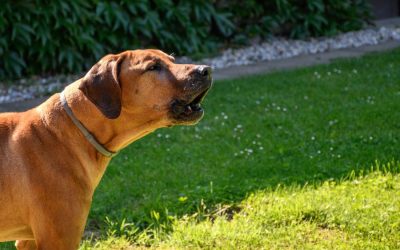
Misi Beaucoupe here, and I found this article today and wanted to share with all my four legged friends.  Tell your Mommy and Daddy that you want them to take you for a walk.  Don’t forget to tell them to start out with short walks.  We don’t want them to be too sore to continue walking us.  Also them that if they take us for a walk we will sleep through the night, and we will be happy content doggies.

PS:  My mommy Barbie, and her staff can stop by during the day to take your dogs for a walk if you get to busy.

How Much Exercise Does Your Dog Need?

Pet Advice

My friend, Tracy, likes to take her dogs on long walks and hikes with her. While they love the exercise, she said they were worn out after a few days in the mountains. In fact, after all the hiking, they were so exhausted that she was giving them a break and taking them only on short walks. It got me thinking, how much exercise does your dog need?

As it turns out, not all dogs require the same amount of exercise. Exercise needs have very little to do with size. Instead breed tends to count the most. For example Jack Russell Terriers and Shelties often begin to misbehave when given too few walks or hikes. On the other hand, a mastiff, and many other large dogs may be happy with a couple of daily walks in the park or a short game of Frisbee.

Surprisingly, little dogs require more exercise than larger dogs. And most of their exercise needs can be easily satisfied in an apartment or back yard. If your small dog has enough toys, or a dog or cat companion, he or she can generally meet all of his exercise needs. However, try to walk your dog on a daily basis too; dogs love to go outside and a walk is healthy for both the dog and its owner.

Mid-size breeds can also vary in their need for exercise. Dogs that are natural hunters or herders require more exercise. Beagles, hounds, border collies, Alaskan sled dogs, and Australian shepherds tend to be restless if cooped up. They need time to run around, catch and chase things, and to walk or jog.

Since many dogs are mixed breeds, it can be hard to know how much exercise this type of dog requires. If you get a mixed breed dog, you can watch his or her behavior. If your dog enjoys relaxing in the sun most of the day, he or she probably does not need as much exercise. On the other hand, if your dog seems restless and wanders around the house, he or she needs more exercise. And, of course, older dogs tend to need less daily exercise than do younger dogs.
Most dogs also require mental exercise. Dogs, like people, can get bored. Certain dogs get bored enough to become distracted and destroy your plants or eat your shoes! Toys that require some work or effort to reap the rewards are a great way to challenge your dog mentally. Further, daily interaction with your dog will help satisfy some of his or her mental exercise needs.
I always say that dogs, like people, can only benefit from daily exercise. But, some dogs (like some people) can be happy and healthy with a lesser amount of exercise. Look to your dog for signs as to whether he is satisfied with the exercise that you are giving him or her. But do remember that the more your dogs exercise during the day, the better they (and you) will sleep through the night.

How long would you want to wait before someone was made aware that your pet needs attention?

My Notification Service

Nationally the average time to notify family or friends of an emergency is six (6) hours….

if that was your pet

How long would you want to wait before someone was made aware that your pet needs attention?

My Notification Services and 2 Paws Up Inc

Give the gift of Peace of Mind by visiting this web site: 

https://mynotify1.com/index.php?aff_aid=81

You will be able to receive a 10% discount on your subscription.

New and existing clients will receive $5 off their next visit when they sign up for a subscription.

Fun and Games with Your Canine Companion

It is what about nine weeks until spring?  Spring will be here before you know it. We all know that dogs of all ages need stimulation and activity, both physical and mental.  Let’s start right now, make a New Year’s resolution to our canine companion to get out and learn, walk and play together.  Dogs of different ages need fun and games for different reasons.  For a puppy, everything is new and each game is a discovery and a learning experience.  For the mature dog they seem to value the interaction and camaraderie with other family members on outings.  For the canine senior citizen, activity helps to keep their senses sharper and also keeps their remaining energy and enthusiasm at a higher level.

It’s not necessary all fun and games.  At the core of your activities there needs to be an element of learning, obedience and training.  What do you think when you hear the word “core”?  Hum, it makes me think of doing abdominal exercises.  Well really, we have to keep our core strong, if we want to be strong.  What this really means is combining education, training, and play.  This severs as a schooling period for puppies and young dogs, reinforces and sustains training of the adult dogs, and helps older dogs adapt more easily to the challenges they face with aging.

So when you take your dog for a walk down the street, or out in the backyard for a game of fetch, or to the park for a game of Frisbee, obedience is vital.  The basic command such as sit, stay, come, leave it, or heal is so important.  Just think about how not-fun it would be if your dog didn’t obey the basic commands.

If your canine companion could use some brushing up on the obedience routine or if you’ve got a canine companion that needs to start from “square one”, there are several places in the area such as the Lawrenceville Kennel Club, PETCO, PetSmart, BarkBusters, and US Canine.  You may also contact the Association of Pet Dog Trainers (ADPT) at http://www.adpt.com for more information.

Look for future articles on sports for your canine companion such as Rally-Obedience, and Fly Ball.

http://www.petsit.com

http://www.adpt.com

The Potbellied Pig as a family pet.

The dwarf swine was officially developed in the 1960’s.  In 1985 Keith Connell was the person who originally imported potbellied pigs to Canada.  It was in 1986 that the potbellied pigs become very popular.  If the pigs’ weight is watched they can weigh as little as 100 to 200 pounds.  If their weight gets out of control your pig can tip the scales around 300 pounds.  Pigs can be easily housebroken and this was one of the reasons they became so popular as well as the fact they are smart.  Some ranking systems place them fourth on the list, behind humans, apes and dolphins. The potbellied pig can openly express their fondness for certain humans.

The potbellied pigs care is more similar to canine care than livestock care.  They should spend at least part of their day outside. It has been reported that serious aggression problems have been observed in pigs that are full-time indoor pets. This is due to their territorial and herd instincts.

Potbellied pig’s indoor accommodations range from a separate room with bedding, litter box and toys to large animal crates in a room.  Some owners pet proof their homes with non-skid mats and runners, to ramps that allow the adult pigs to avoid climbing stairs. The litter box needs to be big enough for the pig to turn around in and sides low enough to get easily in and out of.  Pigs love toys.  They play with a variety of balls; fetch toys or any toy with food.  Some people harness up their potbellied pig and take them for a walk.

Most pigs are fed twice a day.  Their diet consists of commercial, pelleted feed made especially for potbellied pigs, supplemented with fruits and vegetables.   Some owners even give their pigs a children’s chewable multi-vitamin daily.  They also like plain air-popped popcorn, and carrot slices.

In nature pigs are prey, not predators.  Even though pigs weigh 100 to 200 pounds they can still fall prey from predators, especially dogs. They must have a safe and secure place to stay during the time they spend outdoors.  In the summer they need plenty of fresh water, shade and sunscreen. They also need clean water to splash around in due to the fact they do not sweat.  Many owners provide a child’s plastic wading pool.  Even a spray mist from the hose in the summer works too.  Even though the pigs are given plenty of toys to play with, they even need the time outdoors to do “pig behavior” such as grazing, rooting and rolling on the ground.

You can find a more complete source of information on potbellied pigs on the following website: http://www.petpigs.com

Let me know how much you enjoyed this article.  I would welcome comments on how your care for your potbellied pig.  I also welcome photos of your family potbellied pig to showcase on my website.

Bearded Dragons Care 101

I remember my first bearded dragon I had to care for while pet sitting.  I had such a fascination with them thus I wanted to share this article for both my fellow pet sitters as well as those thinking of owning a beardie.  I would love your comments.  I agree with Jennifer about this being a great lizard to care for if it is your first lizard.  Perhaps that is why it was such a pleasure to pet sit for.  Perhaps in the near future I will have my own beardie.  This is a great Bearded Dragons Care 101 article written by Jennifer Cosculluela.

A great choice of pet for beginning lizard enthusiasts and reptile hobbyists who are more experienced, bearded dragons do require special care. Pet beardies are docile reptiles that breed well in captivity. This is a great choice for pet owners that are thinking of adopting a bearded dragon.

Dragons that are properly cared for can live for up to twelve years. If you are a new bearded dragon pet owner, you need to learn how to care for your pet properly. Properly caring for your bearded dragon includes giving him the proper enclosure, substrate, food, water, lighting and temperature.

Diet

The proper diet is very important for properly caring for your bearded dragon. They are omnivorous which means that they eat insects, vegetables and fruit. You can purchase or catch the insects yourself, although it may be safer to buy insects since the ones you catch yourself may have been exposed to poisonous insecticides. Other insects include cockroaches, earthworms, wax worms, king worms and mealworms. You can feed him all the crickets he can eat in ten minutes and do this for three times daily. Fresh vegetables need to be administered every day.

You can put a pinch of calcium dusting on his food, since he needs this to grow as well. Your beardie cannot recognize standing water, and misting his food with mineral-rich water will keep him hydrated. He also recognizes water dripping down leaves, so you can spray plastic plants with water as well. Keep in mind that too much water is harmful for your bearded dragon, however, since they originate from the dessert.

Housing

For your beardie’s housing, provide him with the biggest enclosure that you are able to afford and accommodate. For hatchlings, aquarium-type tanks that are between ten and fifteen gallons are good enough. Adult bearded dragons, however, need a terrarium that is between fifty and fifty-five gallons large. Being semi-arboreal, enclosures need to be rectangular, which means that they need to longer rather than taller.

Make sure that the housing you provide has a screen lid rather than using wood, glass or Plexiglas, which hinder air circulation. For the flooring or the substrate of your enclosure, do not put sand if your beardie is under the age of six months old, since they tend to eat sand at this age. The best flooring substrate would be paper towels, vinyl or tiles.

Lighting

Proper lighting is one more aspect of bearded dragon care that you need to take into consideration. Aside from a bright daytime light bulb, your lizard requires a special UVB light to manufacture the vitamin D3 it needs to metabolize calcium. To properly care for your bearded dragon, you need to provide it with fourteen hours of very bright light and ten hours of darkness.

Temperature

Gradient temperature in the enclosure of your pet also needs to be provided. Bearded dragons are cold blooded and move from one side of his cage to another in order to keep his temperature even. One side of his space needs to be between ninety-five and one hundred degrees Fahrenheit for basking, while the other side needs to be between seventy-five and eighty-five degrees Fahrenheit. In the evenings, the temperature needs to be lower than seventy degrees Fahrenheit. The area for basking needs to be between one hundred and one hundred-five degrees Fahrenheit.

Brumation

Dragons do not hibernate but do tend to slow down during the wintertime. This means that they may take a few weeks off and barely touch their food and hide away. This only applies to adult bearded dragons since younger ones under eighteen months of age need to eat regularly.

Jennifer Cosculluela is a freelance writer and author of several publications both online and off.

Article Source: http://EzineArticles.com/?expert=Jennifer_Cosculluela